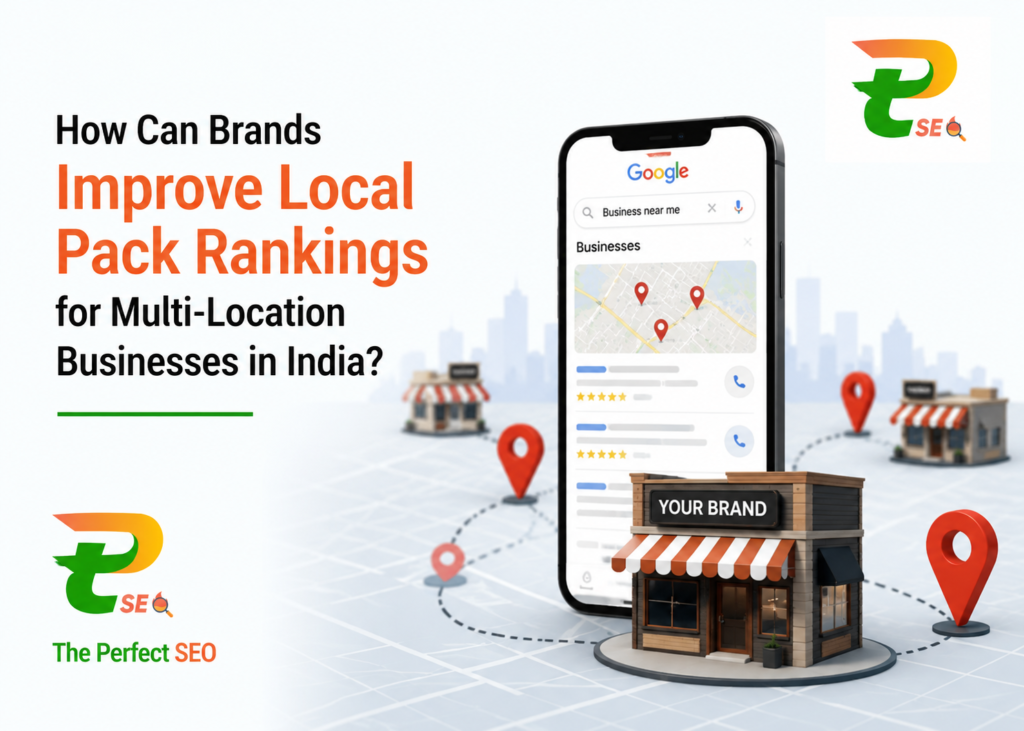
Local search visibility has become one of the strongest growth channels for brands operating across multiple cities in India. Whether a company manages clinics, restaurants, salons, retail outlets, educational institutes, or service centers, appearing in Google’s Local Pack directly impacts leads, walk-ins, calls, and conversions.
For multi-location businesses, the challenge is bigger than ranking a single branch. Every location competes independently in its own city, locality, and service area. A brand with 50 branches may have excellent authority overall, yet struggle because individual locations lack optimization.
The Local Pack is highly competitive in Indian markets. Businesses in Delhi, Mumbai, Bengaluru, Chandigarh, Pune, Jaipur, and Hyderabad often compete against hundreds of local companies targeting the same keywords. Brands that fail to build localized relevance lose valuable traffic to competitors with stronger location signals.
At The Perfect SEO, we have observed that brands succeeding in local search usually follow a structured approach. They focus on consistency, location-specific optimization, trust signals, user engagement, and localized content rather than relying only on generic SEO practices.
What Is the Local Pack?
The Local Pack refers to the map-based business listings shown on Google for location-intent searches. Searches such as:
- “best dentist near me”
- “digital marketing agency in Chandigarh”
- “car service center in Gurgaon”
- “salon in Noida”
usually trigger map listings above organic search results.
These listings display:
- Business name
- Ratings and reviews
- Phone number
- Directions
- Website link
- Operating hours
- Photos
For multi-location businesses, ranking in this section can significantly increase local visibility and customer trust.
Why Multi-Location Businesses Struggle in Local Rankings
Many brands assume creating a Google Business Profile for every branch is enough. Unfortunately, local SEO is much more competitive.
Some common issues include:
Inconsistent Business Information
Different addresses, phone numbers, categories, or business names across directories confuse search engines.
Duplicate Location Pages
Brands often create nearly identical pages for every city. Thin or copied content weakens ranking performance.
Poor Review Management
Branches with low ratings or fewer reviews struggle to appear in competitive searches.
Weak Local Relevance
A national brand may have strong domain authority but weak local signals for specific branches.
Ignoring Hyperlocal Search Intent
Users search with highly specific location phrases like:
- “gym near Sector 62 Noida”
- “spa in Andheri West”
- “best café in Koramangala”
Brands that fail to optimize for these variations miss important traffic opportunities.
Create Fully Optimized Google Business Profiles
Google Business Profile remains the foundation of Local Pack rankings.
Each branch must have an individually optimized profile rather than copied information across locations.
Key optimization areas include:
Accurate NAP Information
NAP stands for Name, Address, and Phone Number. Every detail should remain consistent across:
- Website
- Directories
- Social platforms
- GBP listings
Even minor inconsistencies can affect trust signals.
Select the Right Primary Category
Choosing the wrong category weakens local relevance.
For example:
- A dental clinic should not use “Medical Center” if “Dental Clinic” is more accurate.
- A café should avoid broad categories if “Coffee Shop” fits better.
Add Secondary Categories Carefully
Secondary categories help Google understand additional services.
A salon may include:
- Hair Salon
- Beauty Salon
- Makeup Artist
However, excessive irrelevant categories can dilute relevance.
Upload Real Images
Authentic branch images improve engagement and trust.
Include:
- Exterior photos
- Interior images
- Staff pictures
- Product photos
- Service photos
Indian users often compare visual trust signals before visiting a business.
Maintain Updated Business Hours
Incorrect timings create negative user experiences and increase bounce rates.
Holiday hours and festival schedules should also remain updated.
Build Dedicated Location Pages
A strong location page strategy helps businesses rank both organically and locally.
Each branch should have a dedicated URL such as:
- /delhi/
- /mumbai/
- /chandigarh-sector-17/
- /bangalore-koramangala/
These pages should contain unique, location-specific information.
Essential Elements of a High-Performing Location Page
Unique Localized Content
Avoid duplicate content across branches.
Every page should include:
- Area-specific details
- Local customer preferences
- Nearby landmarks
- Service highlights
- City-specific challenges
Embedded Google Maps
Adding maps strengthens location relevance and improves user experience.
Branch Contact Details
Clearly display:
- Address
- Phone number
- Working hours
Customer Reviews
Location-specific testimonials increase credibility.
Local FAQs
Answer queries users commonly search in that city or locality.
Examples:
- “Do you offer same-day service in Gurgaon?”
- “Is parking available at your Jaipur branch?”
Local Keywords
Include natural keyword variations such as:
- “best gym in Mohali”
- “luxury salon in South Delhi”
- “digital marketing agency in Chandigarh”
Avoid keyword stuffing.
Focus on Review Acquisition and Reputation Management
Reviews strongly influence Local Pack rankings and customer decisions.
Branches with higher ratings and regular reviews usually perform better.
Encourage Genuine Reviews
Request reviews from satisfied customers through:
- SMS
- QR codes at locations
Respond to Every Review
Responses show active engagement.
Reply professionally to both positive and negative feedback.
Use Location Keywords Naturally in Responses
Example:
“Thank you for visiting our Bengaluru branch.”
This reinforces local relevance.
Avoid Fake Reviews
Google increasingly detects suspicious review activity. Fake reviews can damage long-term visibility.
Build Consistent Local Citations
Citations are online mentions of business details across directories and platforms.
Indian businesses should maintain consistency on:
- Justdial
- Sulekha
- IndiaMART
- Practo
- TradeIndia
- Yellow Pages
- Bing Places
- Apple Maps
Industry-specific directories also help improve local authority.
Improve Website Technical SEO
Technical SEO directly impacts local ranking performance.
Mobile Optimization
Most local searches in India happen on mobile devices.
Your website should offer:
- Fast loading speed
- Responsive design
- Click-to-call functionality
- Easy navigation
Improve Core Web Vitals
Google evaluates:
- Loading speed
- Interactivity
- Visual stability
Slow websites reduce user engagement.
Use Schema Markup
Local Business schema helps search engines understand:
- Business type
- Address
- Reviews
- Operating hours
- Services
For multi-location brands, each branch page should contain unique schema markup.
Secure HTTPS Website
HTTPS remains a basic trust signal for rankings and user security.
Create Hyperlocal Content
Localized content helps brands establish topical authority in specific cities.
Instead of generic content, businesses should target hyperlocal search intent.
Examples include:
- “Best bridal makeup trends in Jaipur”
- “Top café spots near Cyber Hub Gurgaon”
- “How to choose a pediatric dentist in Pune”
This approach attracts users searching for local solutions.
Optimize for “Near Me” Searches
“Near me” searches continue to grow rapidly across India.
Google determines proximity using:
- User location
- Relevance
- Business prominence
Brands can improve “near me” visibility through:
- Accurate GBP data
- Strong reviews
- Local backlinks
- Localized keywords
- Active engagement
Build Local Backlinks
Backlinks remain important for local authority.
For multi-location brands, acquiring local links from regional sources improves trust signals.
Effective Local Link Sources
- Local newspapers
- City blogs
- Event sponsorships
- Chamber of commerce websites
- Educational institutions
- Community partnerships
For example, a Chandigarh branch receiving backlinks from Chandigarh-based websites sends strong geographic relevance signals.
Use Localized Social Media Engagement
Social media indirectly supports local SEO through brand visibility and engagement.
Location-based content can strengthen regional relevance.
Examples include:
- Local events
- City campaigns
- Branch launches
- Customer stories
- Festival promotions
Geo-tagged posts also help users discover nearby locations.
Monitor Competitor Strategies
Businesses ranking in the Local Pack usually provide important optimization clues.
Analyze competitors for:
- Review count
- Keyword usage
- Categories
- Local backlinks
- Content quality
- User engagement
This helps identify gaps and opportunities.
Track Local SEO Performance Separately
Each branch should be monitored independently.
Important metrics include:
- Local keyword rankings
- Calls
- Direction requests
- Website clicks
- Review growth
- Conversion rates
A branch performing well in Mumbai may require a completely different strategy than one in Lucknow or Kochi.
Avoid Common Local SEO Mistakes
Many multi-location businesses unknowingly damage rankings through poor practices.
Creating Duplicate Google Business Profiles
Duplicate listings confuse search engines and users.
Using Virtual Offices
Google may suspend listings using fake or shared office addresses.
Ignoring Negative Reviews
Poor review management weakens trust and engagement.
Publishing Thin Content
Low-quality location pages rarely rank competitively.
Keyword Stuffing Business Names
Adding excessive keywords to business names violates Google guidelines.
The Role of User Experience in Local Rankings
Google increasingly measures how users interact with businesses online.
Positive user signals include:
- High click-through rates
- Longer website engagement
- Calls and direction requests
- Positive reviews
- Repeat visits
Brands that prioritize user experience often outperform competitors relying only on keyword optimization.
Why Local SEO Requires Continuous Effort
Local search algorithms constantly evolve.
Competitors continue improving their profiles, reviews, and content. Businesses that stop optimizing eventually lose visibility.
Successful multi-location brands regularly:
- Update profiles
- Publish localized content
- Acquire reviews
- Monitor rankings
- Improve pages
- Strengthen backlinks
Consistency creates long-term dominance in local search.
How AI and Voice Search Are Influencing Local Search
Voice searches are changing how Indian users search for local businesses.
People now use conversational queries such as:
- “best pizza place near me open now”
- “top dentist in Chandigarh with good reviews”
- “nearest gym with personal training”
Brands should optimize content for natural language and question-based searches.
FAQ sections and conversational keyword targeting can improve visibility for these searches.
Importance of Behavioral Signals
Google studies user interaction patterns to determine business quality.
Important behavioral signals include:
- Calls from GBP
- Clicks to website
- Direction requests
- Review activity
- Photo engagement
Businesses with strong engagement often receive better visibility in map results.
Multi-Location SEO Requires Brand Consistency
Even though each branch needs localized optimization, overall branding should remain consistent.
Maintain uniformity in:
- Logo usage
- Brand messaging
- Tone
- Service descriptions
- Website structure
Consistency improves brand trust while localized optimization improves relevance.
Why Professional Local SEO Management Matters
Managing local SEO for one branch is manageable. Managing dozens or hundreds of locations becomes highly complex.
Brands must coordinate:
- GBP optimization
- Review management
- Content creation
- Technical SEO
- Citation management
- Analytics tracking
Without a structured process, inconsistencies quickly affect rankings.
At The Perfect SEO, we help multi-location businesses across India build stronger local visibility through tailored SEO strategies focused on rankings, engagement, and conversions.
Final Thoughts
Improving Local Pack rankings for multi-location businesses in India requires more than basic optimization. Brands must combine technical SEO, localized relevance, trust signals, customer engagement, and consistent business information across every branch.
Businesses that invest in high-quality location pages, strong review strategies, local backlinks, and optimized Google Business Profiles position themselves ahead of competitors in highly competitive Indian markets.
Local SEO success does not happen through shortcuts. Sustainable growth comes from consistency, authenticity, and location-focused optimization that genuinely improves user experience.
For brands aiming to dominate local search visibility across multiple cities, a strategic long-term approach delivers stronger rankings, better engagement, and higher conversions.